How to Store Peptide Products and Protect Dry Peptides
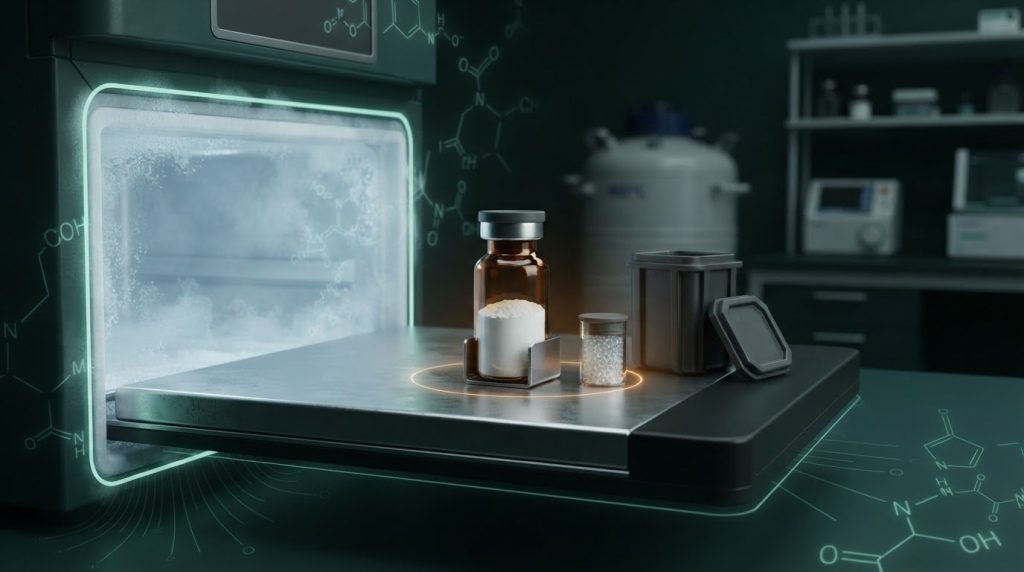
A dry peptide isn’t automatically shelf-stable. This peptide product storage guide starts with a clear rule: keep lyophilised peptides tightly sealed, dry and away from bright light, preferably at -20°C for long-term storage. Some sensitive peptides may need colder conditions, whilst mixed solutions should be divided into aliquots and frozen at -20°C or colder to limit repeated freeze-thaw cycles.
A sealed vial may seem fine wherever it’s convenient, but temperature changes, moisture and light can affect peptide stability. The right storage method depends on whether the peptide is dry or in solution.
This peptide product storage guide explains how to store dry and lyophilised peptides, what to consider if a vial warms up, and how to limit exposure to light and moisture. Use these practical steps to protect the product and reduce unnecessary handling.
Key Takeaways
- Keep dry, lyophilised peptides sealed and protected from moisture and bright light; colder storage is generally better for long-term stability.
- Divide peptide solutions into small aliquots before freezing to reduce repeated thawing and handling.
- Let a cold vial reach room temperature before opening to help limit condensation inside the vial.
- Use clean handling practices, reseal vials promptly and label prepared solutions with their contents and preparation date.
- Storage life varies with the peptide and its condition, so follow the product’s storage instructions when available.
How to store Peptides?
Before opening, keep dry peptide products tightly sealed, dry and away from bright light. For long-term storage, keep them at -20°C or colder, following the product’s own storage instructions.
Use these steps to manage temperature, aliquots and freeze-thaw handling for peptide solutions.
For a visual overview of peptide handling and storage, watch this video:
-
Check Storage Before Opening
Check the label and storage instructions before moving an unopened vial. Keep dry peptide powder sealed against moisture and bright light; long-term storage is preferably at -20°C. Some sensitive peptides may need -80°C. Avoid leaving a vial in a warm or damp place, where conditions can undermine stability before use.
-
Handle Refrigeration and Freezer Storage
Keep peptide solutions frozen at -20°C or colder where possible, and use the storage instructions for the specific peptide. Refrigeration at 4°C may suit short-term use for some peptides, depending on stability. Avoid frost-free freezers for solutions, because automatic defrost cycles cause temperature variation.
- Divide a prepared peptide solution into small, clearly labelled aliquots before freezing. Choose a volume for one planned use, so you thaw only what you need. Aliquoting limits repeated freeze-thaw cycles and reduces exposure to air during handling. Label each vial with the peptide name and concentration.
- Thaw one aliquot at a time, and don’t refreeze it for later use. Repeated freezing and thawing can affect peptides, even if the solution looks unchanged. Keep the remaining aliquots sealed and frozen. This also limits handling that could introduce moisture or contaminants.
- Move frozen vials carefully between storage and use. Let a vial reach room temperature before opening to help limit condensation inside. Open it only when ready to use the contents, then promptly reseal any remaining material. Exposure to moisture and air can affect stability and contribute to oxidation.
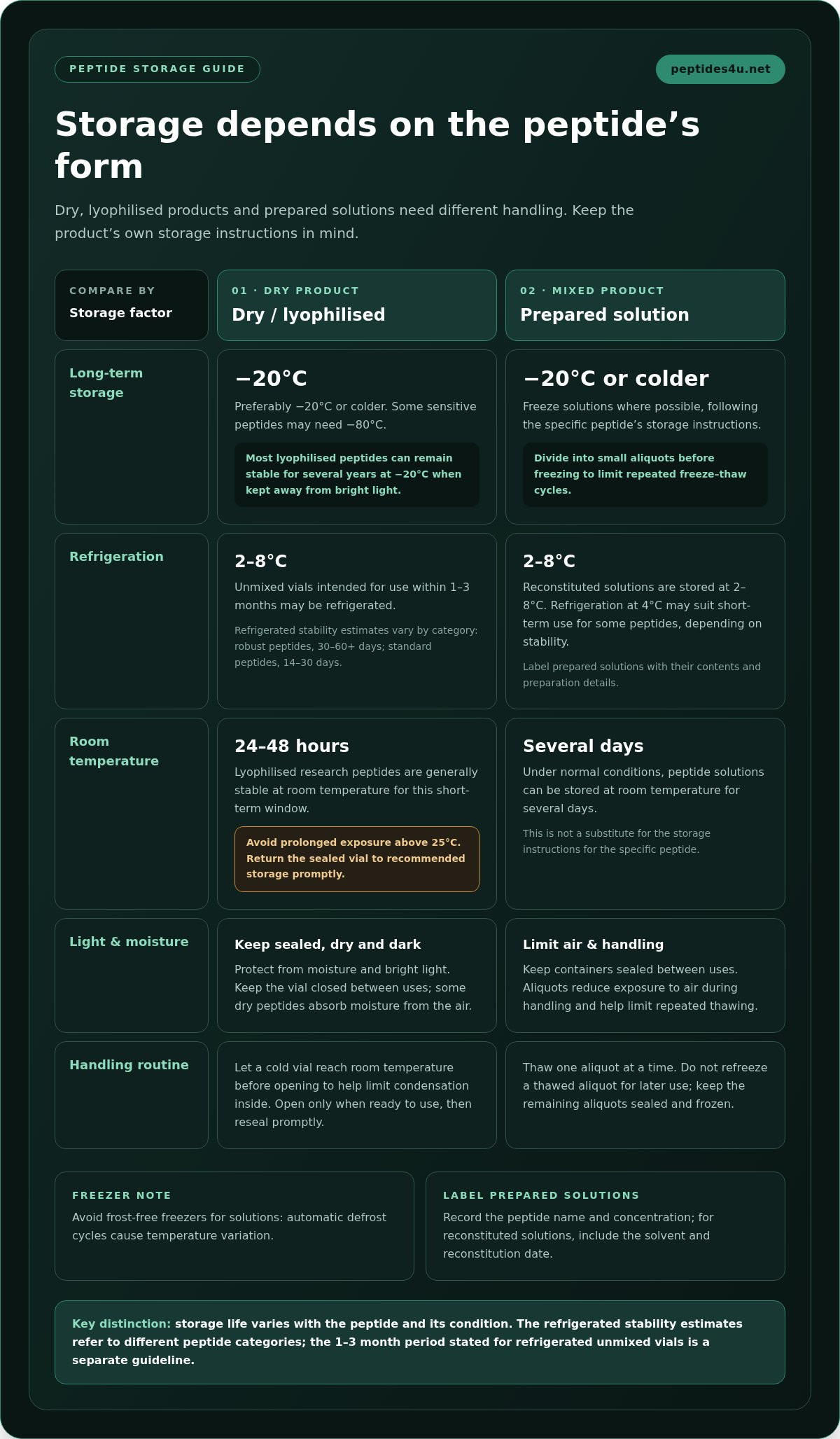
Unmixed peptide vials intended for use within 1-3 months may be stored in a refrigerator, though repeated freeze-thaw cycles can damage these vials. Peptide solutions should be divided into aliquots and stored frozen below −15 °C. Under normal conditions, peptide solutions can be stored at room temperature for several days.
For refrigerated storage, the guide estimates that robust peptides may remain stable for 30-60+ days at 2-8°C, while standard peptides may remain stable for 14-30 days at 2-8°C. These estimates apply to different peptide categories; the stated refrigerator period for unmixed vials is 1-3 months. Keep the distinction between unmixed vials and prepared solutions in mind when choosing storage conditions.
Temperature Stability: What Happens If Peptides Warm Up?
Protect peptide products from heat, bright light and moisture by keeping them sealed in suitable cold storage. Lyophilised peptides are commonly stored at -20°C, away from bright light; avoid prolonged exposure above 25°C.
Use these steps to manage temperature changes and protect dry peptides from environmental exposure.
- Keep lyophilised peptides at -20°C for long-term storage, and follow the product’s instructions where they set a different condition. Most lyophilised peptides can remain stable for several years at -20°C when kept away from bright light. Certain sensitive peptides may need -80°C. Choose storage based on the peptide’s sensitivity, not convenience alone.
- Limit room-temperature exposure when removing a vial from cold storage. Lyophilised research peptides are generally stable at room temperature for 24-48 hours, but that short-term window isn’t a reason to leave them out. Avoid prolonged exposure above 25°C, as warmer conditions can reduce stability. Return the sealed vial to its recommended storage promptly.
- Protect light-sensitive peptides from sunlight and UV light. Store them in a dark place or, where appropriate, in an amber-coloured vial. Keep the container tightly closed between uses. Light can compound the effects of heat and air, so don’t leave an opened vial on a bench or beside a window.
- Keep moisture and oxygen away from dry peptide powder. Tightly close the vial after use and avoid opening it in a humid environment. Some dry peptides absorb moisture from the air, which can affect their condition. Keep the container sealed during temperature changes and let a cold vial reach room temperature before opening to reduce condensation.
- Reduce temperature cycling by planning each removal from storage. Take out only the vial you need rather than repeatedly moving the full supply between the freezer and room temperature. Opening a container after a temperature change can expose its contents to condensation. Record when a vial leaves storage, and return it promptly if it remains unopened.
- Let the peptide’s form guide your storage decisions. Dry peptides may remain stable at room temperature for days to weeks, depending on the peptide, but colder storage offers better protection over longer periods. A sealed, dark location also limits exposure to moisture and oxygen. Don’t assume one peptide’s room-temperature tolerance applies to another.
Use these handling principles as you choose peptide products and plan their storage.
Does light affect peptide storage?
Yes. Protect peptide products from bright light, moisture and air by keeping each vial sealed between uses. Store reconstituted peptide solutions at 2-8°C, and label them with the solvent, concentration and reconstitution date.
- Prepare a clean work area before handling lyophilised samples. Use clean equipment and avoid touching the vial opening or stopper. Moisture and biological contamination can affect the sample, so keep the vial closed except when weighing or transferring peptide. Work carefully and reseal the container as soon as you’ve removed the amount needed.
- Weigh only the amount needed for the immediate task. Keep the remaining lyophilised peptide in its original, tightly sealed vial, away from bright light and moisture. If the powder is exposed during weighing, return it promptly to cold, dry storage. Don’t leave an open vial on a bench while preparing other materials.
- When reconstituting a peptide, use a suitable sterile solvent and follow the product’s instructions. Add the solvent carefully and avoid vigorous handling that could cause foaming. Some peptide solutions may take several hours to reconstitute, so allow time rather than forcing the process. Label the vial with the peptide name, solvent, concentration and preparation date.
- Store reconstituted peptide solutions in a refrigerator at 2-8°C. Keep the vial sealed and protected from light between uses. Depending on the sequence, reconstituted peptides should be used within 3-8 weeks of mixing. Treat that period as a storage limit, not a reason to keep a solution beyond its stated instructions.
- Match the storage period to the solvent. Research peptides reconstituted with bacteriostatic water are said to remain stable at +4°C for up to 4 weeks. Peptides reconstituted with sterile water without preservative should be used within 24-48 hours. The solvent and preparation date therefore matter as much as the refrigerator setting.
- Limit contamination during every withdrawal. Use clean handling practices, keep the stopper and vial opening protected, and close the vial straight after taking the required amount. A 0.2 µm filter may be used to remove potential bacterial contamination from peptide solutions, where appropriate to the preparation.
- Check the label before each use. Confirm the peptide name, concentration, solvent and reconstitution date match your records. Keep prepared solutions away from bright light, and return them to 2-8°C after handling. Don’t leave a vial open or unrefrigerated while completing other work.
Storage and stability of lyophilised peptides
For long-term storage, keep lyophilised peptide powder tightly closed at -20°C or colder, protected from moisture and bright light. Colder conditions may suit sensitive sequences.
- Choose storage temperature according to the peptide’s sensitivity. -20°C is preferred for long-term storage, whilst certain sensitive dried peptides may require -80°C. Most lyophilised research peptides are said to remain stable for 24-36 months when stored correctly at -20°C. At -80°C, dry peptides can remain stable for years, though periodic stability testing is recommended.
- Keep each vial tightly closed and away from moisture, oxygen and bright light. These exposures can contribute to degradation, particularly in peptides with sensitive amino acids. Where possible, use the original sealed vial and return it promptly to cold storage after handling. Don’t leave powder exposed on a bench while preparing equipment or materials.
- Limit repeated temperature changes. Remove only the vial you need, keep it sealed while it reaches room temperature, then open it when ready. This helps reduce condensation inside. Dry powder doesn’t undergo solution freeze-thaw cycles, but repeated warming and cooling can still expose it to moisture when the vial is opened.
- Consider the amino acid sequence when assessing storage risks. Methionine, cysteine, tryptophan and asparagine are more prone to oxidation or hydrolysis. Peptides containing Cys, Met or Trp may need anaerobic storage to maintain stability. Glutamine at the N-terminus is described as degrading within a few days, so avoid extended storage after exposure.
- Reseal the vial immediately after removing powder. Where suitable, return it to cold storage under dry conditions. Keep dry peptides containing Asp, Glu, Lys, Arg or His in a tightly capped vial inside a desiccator to reduce moisture uptake. Keep the desiccator closed between uses, and avoid opening it in a humid area.
- Use the product’s storage instructions to set your storage plan. “Lyophilised” and “lyophilized” refer to the same freeze-dried form, but stability still depends on the sequence and handling. Don’t assume one peptide’s storage window applies to another. Record the storage date and temperature changes, especially for samples intended for longer-term work.
Dry peptide storage
Dry peptide storage depends on the sequence, vial seal and exposure to moisture. Keep the powder dry and sealed. Choose colder conditions for longer storage and for sensitive residues.
Use this peptide product storage guide as a practical checklist, and follow the product-specific instructions for each vial.
- Set the storage temperature using the product’s instructions. Long-term storage is preferably at -20°C or colder. For longer-term storage, lyophilised peptides are preferably kept at -50°C or lower, whilst certain sensitive dried peptides may need -80°C. Keep the vial away from bright light at every temperature.
- Protect the powder from humidity. Peptides containing Asp, Glu, Lys, Arg or His can absorb moisture from the air. Store them in a tightly capped vial inside a desiccator. Keep the desiccator closed between uses, especially in a humid room, and avoid opening the peptide vial until you’re ready to remove material.
- Match handling to the amino acid sequence. Cys, Met and Trp residues are prone to oxidation, so anaerobic storage may help maintain stability. Methionine, cysteine, tryptophan and asparagine are also more prone to oxidation or hydrolysis. Sequence matters: don’t assume another peptide’s storage conditions apply.
- Limit repeated exposure during weighing. Let a cold, sealed vial reach room temperature before opening, then remove the amount required and promptly reseal it. This helps reduce condensation inside. Use dry equipment, keep the remaining powder covered and return it to cold storage after handling.
- Keep dry powder separate from buffers and solvents until reconstitution. Adding liquid turns it into a peptide solution, which needs different storage and handling. Don’t return unused powder to the original vial if it has contacted solvent or damp equipment. Keep the original contents dry and uncontaminated.
- Record storage conditions for samples kept over time. Note the storage temperature and any periods outside cold storage, then compare them with the product instructions. Dry peptides stored at -80°C can remain stable for years, although periodic stability testing is recommended. A change in appearance alone doesn’t establish whether the peptide remains intact. A peptide product storage guide works best alongside these product-specific records.
For peptide products, explore the available peptide range and keep the storage instructions with each vial.
Peptides4u: Plumas SereneQ
Peptides4u offers Plumas SereneQ as a product option for readers who have reviewed peptide storage and handling guidance. Use the storage instructions supplied with the product, and keep them alongside your own handling notes. General advice about dry peptides or solutions may not apply to every product form.
Before handling a product, understand its form and follow the storage directions that apply to it. This section is a next step for readers exploring Plumas SereneQ, not medical advice or a substitute for product-specific instructions.
Visit Peptides4u to view Plumas SereneQ.
Build a storage routine you can keep
Turn this peptide product storage guide into a clear routine for each product you handle. Keep the storage instructions with the vial, and record its form and any changes in handling. This gives you a consistent reference when organising storage or preparing a product for use.
If you’re considering a peptide product, make the next step a product-specific one. Peptides4u offers Plumas SereneQ and specialised laboratory research vials. Review the information provided for the product you’re considering, then follow its storage directions rather than assuming one method suits every form.
Good preparation makes storage decisions easier. Keep your notes accessible, use them consistently and take time to understand a product before handling it.
Visit Peptides4u to view its peptide products and take your next step with confidence.
Frequently Asked Questions
Do peptides need to be refrigerated during shipping?
It depends on the product form and its storage instructions. Peptides4u’s SereneQ pens should be refrigerated at 2-8°C, but short periods at room temperature during transit are normal; don’t freeze them. Dry peptides are commonly shipped before reconstitution, with dry ice used to maintain low temperatures and limit humidity exposure. Check the instructions for the specific product when it arrives, then place it in the recommended storage promptly.
How can you tell if a peptide has degraded?
Appearance alone can’t reliably confirm peptide integrity. Changes in colour, texture or clarity may prompt closer review, but don’t establish whether a peptide has degraded. For research samples, methods such as HPLC, mass spectrometry or circular dichroism can assess integrity over time. Record storage conditions and handling so any assessment can be considered alongside the sample’s exposure to temperature and moisture.
How long do lyophilised peptides last at room temperature?
There isn’t one dependable room-temperature duration for every lyophilised peptide. Guidance ranges from 24-48 hours for short-term exposure of lyophilised research peptides to several months for freeze-dried powder, depending on the peptide and conditions. Avoid prolonged exposure above 25°C. Sequence, moisture and light affect stability, so use the product’s storage instructions and return the sealed vial to cold storage after temporary handling.
How long does reconstituted peptide last in the fridge?
Refrigerated stability depends on the peptide sequence and solvent. General guidance gives 3-8 weeks after mixing, whilst research peptides made with sterile water without preservative should be used within 24-48 hours. Research peptides reconstituted with bacteriostatic water are said to remain stable at +4°C for up to 4 weeks. Label the vial with its solvent and preparation date, then follow the product-specific instructions.
What temperature should peptide products be stored at, and can they be frozen?
Dry or lyophilised peptides are commonly stored at -20°C for long-term keeping; some sensitive peptides may need -80°C. Peptide solutions can be aliquoted and frozen to reduce repeated thawing. Product formats differ, though. SereneQ pens should be refrigerated at 2-8°C in their outer carton, away from light, and must not be frozen. Check the product instructions before choosing a storage method.
How long do peptide products last after opening or reconstitution?
Opening a dry vial and reconstituting a peptide are different events. Once opened, keep dry powder tightly sealed and protect it from moisture; its usable storage period depends on the product and handling. After reconstitution, solvent and sequence matter: general guidance ranges from 3-8 weeks, while sterile water without preservative has a 24-48-hour window. Write the opening or preparation date on your storage record.
How should peptide products be stored during travel or shipping in the UK?
Keep the product sealed and protect it from direct light and heat during travel. SereneQ pens should not be frozen; short periods at room temperature in transit are normal, followed by refrigeration at 2-8°C. For dry research peptides, guidance recommends shipping before reconstitution on dry ice to maintain low temperatures and minimise humidity exposure. On arrival, follow the specific product instructions rather than applying one method to every format.
What storage instructions do peptide product manufacturers recommend?
Manufacturers’ instructions should match the product’s format, so follow the directions on its packaging rather than using generic advice alone. For example, SereneQ pen instructions specify refrigeration at 2-8°C in the outer carton, away from light, and say not to freeze. Keep those directions with the product, and note any handling that could affect storage. Vial and solution instructions may differ from pen guidance.
1 comment